M.F.A. - Theatre
Boston University - 1982
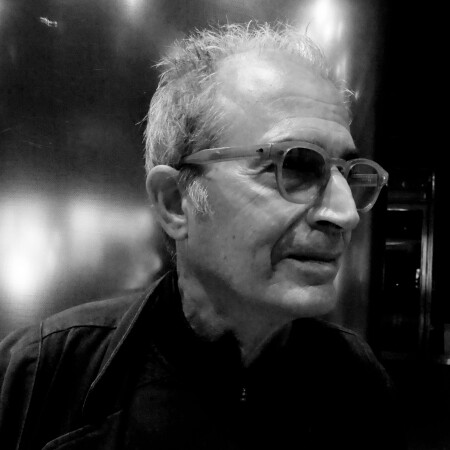
Thomas Riccio
Professor Emeritus — Visual and Performing Arts
Visiting Professor, Ethnography, Jishou University, China
Affiliate, Center for Asian Studies
Professional Preparation
B.A. - English
Cleveland State University - 1978
Cleveland State University - 1978
Research Areas
Areas of Specialization
His work consists of three interrelated nodes of interest: 1) Indigenous Performance and Ethnography, 2) Experimental Performance, and 3) AI and Robotics as Performance.Within these nodes are folded Performance Studies, Media Performance and Installation, Ritual and Shamanism, Cultural Theory, Literature, and Criticism.
Publications
Appointments
Professor, Visual and Performing Arts
University of Texas at Dallas [2003–2024]
University of Texas at Dallas [2003–2024]
Artistic Director
Dead White Zombies, Dallas [2011–Present]
Dead White Zombies, Dallas [2011–Present]
Visiitng Professor, Ethnography and Anthropology
Jishou University, China [2016–2020]
Jishou University, China [2016–2020]
Creative Director
Hanson Robotics [2018–2019]
Lead Narrative Engineer, 2005-2009
Hanson Robotics [2018–2019]
Lead Narrative Engineer, 2005-2009
Visiting Professor, Theatre and Performance
Punducherry University, India [2013–2013]
Punducherry University, India [2013–2013]
Visiting Professor, Theatre and Cultural Studies
Tribhuvan University, Nepal [2012–2013]
Tribhuvan University, Nepal [2012–2013]
Visiting Artist
Addis Ababa University, Eithiopia [2009–2010]
Addis Ababa University, Eithiopia [2009–2010]
Visiting Professor, Theatre
University of Dar es Salaam, Tanzania [1999–2000]
University of Dar es Salaam, Tanzania [1999–2000]
Visiting Professor, Theatre
University of Nairobi, Kenya [1998–1999]
University of Nairobi, Kenya [1998–1999]
Visiting Professor
California Institute of Integral Studies, San Francisco [1997–1998]
California Institute of Integral Studies, San Francisco [1997–1998]
Projects
Ritual, Shamanism, and Indigenous Performance
Ritual, Shamanism, and Indigenous Performance — Selected Field Projects- Miao folk performance and ritual — Xiangxi, Hunan, China (2001; 2002–03; 2015–16; ongoing). Fieldwork with badai (spirit healers) and Nuo folk performance, with the Miao Culture Bureau; supported by the Xiangxi Cultural Bureau and Jishou University.
- Theru Koothu — Tamil Nadu, India (Feb–March 2013). Research in the Tamil folk performance tradition.
- Lul Theatre — Addis Ababa, Ethiopia (Fall 2009). Artist-in-residence; led a workshop and developed a production; research on Indigenous performance and spiritual practice. A Litooma Project.
- Kenya, Tanzania, and Burkina Faso (1999–2002). Performance research and workshops; sponsored by the East Africa Theatre Association, the Community Health Awareness Puppet Program, and FITMO.
- !Xuu and Khwe Cultural Project — Kalahari Desert (Summer 1994). Field research with the !Xuu and Khwe. A Litooma Project.
- Center for the Arts — Lusaka, Zambia (Feb–May 1994). Director/choreographer of Imipashi and workshop instructor; a Litooma Project to revitalize traditional Zambian performance.
- Natal Performing Arts Council — Durban, South Africa (Aug–Dec 1993). Director/choreographer and performer, Makanda Mahlanu; director of the Hlanganani Project, a 51-performance tour throughout Natal and Zululand. A Litooma Project.
- Sakha National Theatre — Yakutsk, Republic of Sakha, Siberia (May–Aug 1993). Workshop instructor and director/choreographer of Sardaana; field research in Sakha shamanistic traditions. A Litooma Project.
- Tuma Theatre — Fairbanks, Alaska (1989–1998). Artistic director and instructor of the Alaska Native performance program; director/choreographer of seven productions; research and fieldwork throughout Alaska.
- Kwasa Group, Natal Performing Arts Council — Durban, South Africa (Spring 1992). Director/choreographer, Emandulo (The Ancient One); 28 performances in South Africa. A Litooma Project.
- Metamorphosis Theatre — St. Petersburg, Russia (Summer 1992). Workshops and director/choreographer of Shadows from the Planet Fire; premiered at the Baltic Theatre and toured Russia, Ukraine, and Bulgaria. A Litooma Project.
- Springs Theatre — Holstebro, Denmark (Spring–Summer 1992). Workshops for a refugee Tamil group; co-directed King Harichandra, based on a Hindu legend. A Litooma Project.
- Tùkak' Teatret — Fjaltring, Denmark (Summer 1992). Guest artist and workshop instructor in movement and Alaska Native dance and drumming. A Litooma Project.
- World Eskimo-Indian Olympics, University of Alaska Museum — Fairbanks (Summers 1989–2003). Writer/director/choreographer of Northern Inua, a demonstration of traditional Alaska Native games.
Additional Information
Brief Bio
Thomas Riccio is a performance and media artist, writer, scholar, and Professor Emeritus of Visual and Performing Arts.
Prior to UT Dallas, he served as Professor of Theatre at the University of Alaska Fairbanks, where he also led the Tuma Theatre, an Alaska Native company. His previous roles include Artistic Director of Chicago's Organic Theater, Associate Artistic Director at the Cleveland Play House, and Associate Literary Director at Harvard's American Repertory Theatre. He is an award-winning director, teacher, and playwright, and has directed over 120 productions worldwide, showcasing his work at venues like La MaMa E.T.C., New York Theatre Workshop, and Italy's National Theatre.His work consists of three interrelated nodes of interest: 1) Indigenous Performance and Ethnography, 2) Experimental Performance, and 3) AI and Robotics as Performance.
With over thirty-five years of fieldwork, he has deep expertise in ritual, shamanism, and Indigenous practices from regions including South Africa, Zambia, Kenya, Burkina Faso, Tanzania, Ethiopia, Brazil, Mexico, Russia, Alaska, Korea, India, Nepal, and China. His collaborations span the !Xuu Bushmen of the Kalahari, South Africa's Zulu, and China's Miao communities. He is also a Fellow of the Royal Anthropological Institute.
The Republic of Sakha (Siberia) recognized him as a Cultural Hero. The Doyon Native Corporation conferred the Dancing Bear award upon him, and the Museum of the North acknowledged his contributions to Alaska Native cultural preservation and activism. He is an internationally recognized expert in the field of indigenous performance and has conducted workshops, presented lectures, and been a visiting artist, holding numerous visiting professorships throughout the world. He has appeared on podcasts and in documentary films.
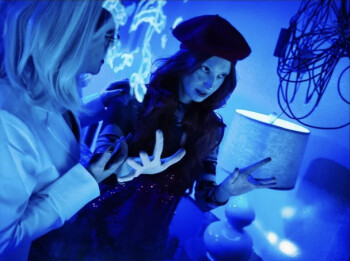
He is the founding Artistic Director of Dead White Zombies, a Dallas-based post-disciplinary experimental performance group. For DWZ writes, directs, and designs site-specific immersive performances such as the critically acclaimed Big Bird (2026), T.N.B. (2013), Holy Bone (2017), and the PBS-broadcast About Face (2021).
He worked with Hanson Robotics as Lead Narrative Engineer from 2005 to 09 and as Creative Director from 2017 to 19, creating personas for social robots such as Sophia, Einstein, Philip K. Dick, Bina48, and Zeno. He remains active in writing and working in the fields of AI and robotics.
His articles and chapters have appeared in a wide range of books and publications, including TDR, PAJ, Theatre Research International, The International Review of Psychiatry, and Religions. His videos, photographs, and installations have been exhibited internationally at festivals and in galleries.
His work has received support from numerous organizations, including the NEH, NEA, Mellon Foundation, MacArthur Foundation, AT&T, Fulbright, Goethe-Institut, The Watermill Foundation, and from cultural councils and organizations in Alaska, Chicago, Ohio, Dallas, Sweden, Norway, Finland, France, the Netherlands, Poland, China, India, Nepal, Great Britain, South Africa, and Zambia.
His publications include Sophia Robot: Post-Human Being (Routledge, 2024), Performing Body, Space, and Place: The Cosmocentric Way (Routledge, 2026), and Performing Africa: Remixing Tradition, Theatre, and Culture (Peter Lang, 2007). His upcoming book, The Ritual of Totality: Performance, AI, and the Great Becoming, is scheduled for publication by Palgrave in 2027. He received the Onassis Foundation's International Prize for Playwriting; his play Comeback for Elvis ran in repertory at Kleist Theatre, Frankfurt, Germany.
News Articles
Life on the edge: Avant-garde theatre, dance thrive in Dallas
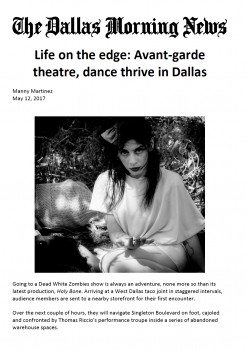
Going to a Dead White Zombies show is always an adventure, none more so than its latest production, Holy Bone. Arriving at a West Dallas taco joint in staggered intervals, audience members are sent to a nearby storefront for their first encounter. Over the next couple of hours, they will navigate Singleton Boulevard on foot, cajoled and confronted by Thomas Riccio's performance troupe inside a series of abandoned warehouse spaces.
"The work is hard to explain because it's more of a felt thing, an idea that's in the body, not the head," he says a few days later at Tacos Mariachi as showtime approaches. "It's like a walking meditation. When you're on the street and don't know where to go, that's part of it, too." click link
Dead White Zombies and the Holy Bone
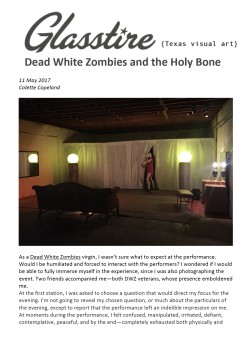 As a Dead White Zombies virgin, I wasn’t sure what to expect at the performance. Would I be humiliated and forced to interact with the performers? I wondered if I would be able to fully immerse myself in the experience, since I was also photographing the event. Two friends accompanied me—both DWZ veterans, whose presence emboldened me.At the first station, I was asked to choose a question that would direct my focus for the evening. I’m not going to reveal my chosen question, or much about the particulars of the evening, except to report that the performance left an indelible impression on me. At moments during the performance, I felt confused, manipulated, irritated, defiant, contemplative, peaceful, and by the end—completely exhausted both physically and mentally. My one regret is that I didn’t go twice, first to experience and second to document...click link
This Troupe Is Probably Staging a ‘Show’ Right NowYou've never experienced theater quite like the Dead White Zombies.
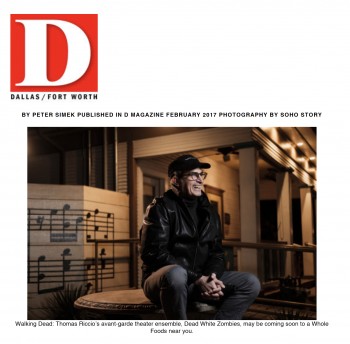
On a gray and misty Saturday afternoon in December, the Whole Foods in Lakewood is crowded with shoppers stocking up on groceries for the week. The lines at the checkouts are four or five deep, and the bar area is crowded with people enjoying craft beers. Save for the seasonal holiday decor and items, the scene is more or less like the one that plays out every Saturday afternoon. In the freezer section, however, something is off. There is a young man, maybe late 20s, tall and thin, shuffling down the middle of the aisle. He slides the toe of his right shoe in a semicircle and then brings his left foot forward to meet it. He pauses, then repeats the sequence. At a glance, you might ignore him, brush him off as a little touched. But upon closer observation, something organized and intentional reveals itself in his movements. His eyes are fixed on the floor, and it looks as if the man is tracing out invisible patterns, like he’s looking for something hidden in the lines of the concrete. As he shuffles down the aisle, his odd, smooth movements register as a kind of dance...click link
Dead White Zombies, Best Theatre Company in Dallas 2017
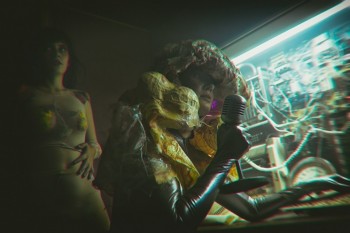 The symphony, the opera, the theater ... these are not venues people with short attention spans are likely to visit, however beautiful the work created inside them may be. That's why we're grateful for Dead White Zombies, a theater experience that's perfect for anyone with an insatiable curiosity and an inability to sit still. University of Texas at Dallas drama professor Thomas Riccio writes all the performances, which Dead White Zombies call "instigations." They're loosely scripted, interactive and staged in unconventional spaces. Last May, Holy Bone, a performance designed to encourage attendees to disconnect from technology and reconnect to their humanity, started out at Tacos Mariachi and sent attendees — broken into small groups — on an adventure through spaces in West Dallas. The plots are a bit hard to follow, but a Dead White Zombies experience is always stimulating and mind expanding.