Lakshman Tamil

Lakshman Tamil

Professor - Electrical and Computer Engineering
 
469-688-8549
ECN3912
Faculty Homepage
Google Scholar
ORCID
Tags:

Professional Preparation

Ph.D. - Electrical Engineering
University of Rhode Island - 1989
M.S. - Mathematics
University of Rhode Island - 1989
M.Tech. - Microwave and Optical Communications Engineering
Indian Institute of Technology, Kharagpur - 1983
B.E. - Electronics and Communications Engineering
Madurai Kamaraj University - 1981

Research Areas

  • Quantum Machine Learning
  • AI & Machine Learning for Medicine and Healthcare Applications
  • Internet of Things (IoT)

Publications

TRANSMISSION ISSUES IN REGIONAL AND METROPOLITAN AREA NETWORKS - Journal Article
Deflection Routing in All-Optical Packet Switched Irregular Networks - Journal Article
Element Management System Framework for a Remote Telemedicine Sensor Environment - Journal Article
INVERSE SCATTERING TECHNIQUES - Journal Article
Theories of Learning-Reasoning Lattices Applied to Telehealth Systems - Journal Article
Upcoming Issues of the - Journal Article
Apnea MedAssist: A Personalized Low-Cost Sleep Apnea Monitor - Journal Article
Machine Learning-Based Asthma Risk Prediction Using IoT and Smartphone Applications 2021 - Journal Article

Awards

Best Teacher Award - Dept. of Electrical and Computer Engineering [2022]
Fellow - national Academy of Inventors (NAI) [2019]
Fellow - OPTICA (Optical Society of America) [2009]
Fellow - The Electromagnetics Academy [2000]
Elected Member - Radio Science Union, commission B & D [1995]
Senior Member - IEEE [1993]

Appointments

CEO and CTO
Yotta Networks, Inc. [2000–2003]
Full Professor (with tenure)
University of Texas at Dallas [1999–Present]
Senior Scientist and Unit Manager
Alcatel [1997–1999]
Corporate Research Center
Consulting Scientist
Spike Technologies [1997–1997]
Consulting Scientist
Alcatel Network Systems [1994–1994]
Associate Professor (with tenure)
University of Texas at Dallas [1993–1999]
Assistant Professor
University of Texas at Dallas [1988–1993]

Projects

Automated Breast Cancer Detection
2014/01

 Automated Breast Cancer Detection 

One in eight women in the U.S. will develop breast cancer at some point in life. Mammography is the “gold standard” for screening and diagnosis of breast cancer and has been associated with a reduction in breast cancer-related mortality. The shortages of radiologists, the number of hours spent on reading, and the potential for missing cancers, have driven a rapid increase in research for using Artificial Intelligence (AI) systems to support radiologists or autonomously analyze, identify, categorize, and report findings of a mammogram. We have built a complete end-to-end AI system for mammogram screening with a > 95% Area under the curve of Receiver operating characteristics (AUC-ROC) with CI ±0.021 at 95% confidence level. The prototype that we have developed at the University of Texas at Dallas is available for public demonstration at automammogram.utdallas.edu. With the support of the university this technology has been commercialized under MedCognetics, Inc. (www.medcognetics.com). Our hope that we could democratize healthcare through easily accessible and less costly healthcare services using systems like this. 

1. Polat D, Garza SA, Waggener SC, Cogan T, Gupta PS, Garg V, Tamil L, C. Parghi, Dogan BE, “Harmonizing DBT and FFDM through Machine Learning: A Multiracial, Multi-institutional Validation in Breast Cancer Imaging,” European Congress of Radiology (ECR) 2024, Feb. 28-Mar. 3, 2024, Vienna, Austria. 

2. Timothy Cogan, Richard Stubblefield, and Lakshman Tamil, “Racially unbiased Deep Learning-based Mammogram Analyzer,” U.S. Patent application: 11,948,297, issued on: 04/02/2024. Licensed to MedCognetics by Board of Regents of the UT system. 

3. Polat D, Garza SA, Waggener SC, Cogan T, Gupta PS, Garg V, Tamil L, Dogan BE, “Bias Free Artificial Intelligence: Developing a deep learning algorithm for diverse racial populations in breast cancer diagnosis,” Radiological Society of North America Annual Conference, Chicago, IL., Nov. 26-30, 2023. 

4. Timothy Cogan, Maribeth Cogan, and Lakshman Tamil. "RAMS: remote and automatic mammogram screening." Computers in biology and medicine 107 (2019): 18-29. 

5. Timothy Cogan and Lakshman Tamil. "Deep Understanding of Breast Density Classification." 2020 42nd Annual International Conference of the IEEE Engineering in Medicine & Biology Society (EMBC). IEEE, 2020. 

6. M. Ghaderi, G. Gupta, M. Abdallah, K. Qaraqe and L. Tamil, “mHealth Platform for Breast Cancer Risk Assessment,” IEEE Int. Conf. on Health Informatics (ICHI 2015), Dallas, USA, Oct. 21-23, 2015. (Poster) 
Automated Heart Arrhythmia Assessment and Monitoring
2010/01  

Automated Heart Arrhythmia Assessment and Monitoring 

Electrocardiogram (ECG) is one of the most important tools that doctors use to get information about the wellbeing of a person. This tool has been around for more than hundred years but still evolving with modern advancements in  technology. We have developed a flexible ECG patch that is easier to use, low cost and disposable. The other part of our research on ECG is the application of AI in developing algorithms that can automatically detect heart arrhythmias and changes in the ECG and provide an advance warning. The biggest challenge today in reducing the deaths due to cardiac conditions is, the long delay in calling for help from the time the symptoms are recognized; it averages about more than 30 hours. We hope our advanced warning system helps in reducing this time delay by making the ECG patient centric. autoecg.utdallas.edu is web available for public demonstration of our arrhythmia assessment and monitoring system. This technology has been commercialized with the support of the university under Cardiocognetics, Inc.(www.cardiocognetics.com) 

1. “Method and Device for Early Detection of Heart Attack,” Inventors: L. Tamil, M. Nourani, G. Gupta, and S. Banerjee, U.S. patent 9,161,705; issued on Oct. 20, 2015, assigned to The Board of Regents of the University of Texas System (Austin, TX). 

2. R. Ghosh and L. S. Tamil, “Computation-efficient and Compact FPGA Design for a Real-time Wearable Arrhythmia Detector,” J. Biomed. Engr. Advances, vol.2, 100019, Oct. 2021. 

3. V. Kalidas and L. S. Tamil, “Cardiac Arrhythmia Classification Using Multi-modal Signal Analysis,” Physiological Measurement vol. 37, no. 8, pp. 1253-1272, July 2016. 

4. C. Shi, B. Levine, and L. Tamil, “A Mobile Health System to Identify the Onset of Paroxysmal Atrial Fibrillation,” IEEE Int. Conf. on Health Informatics (ICHI 2015), Dallas, USA, Oct. 21-23, 2015. 

5. V. Kalidas and L. Tamil, “Enhancing Accuracy of Arrhythmia Classification by Combining Logical and Machine Learning Techniques,” Computing in Cardiology 2015, Nice, France, Sept. 6-9, 2015. 
Telemedicine and Chronic Care Platform
2010/01

 Telemedicine and Chronic Care Platform 

Providing accessibility to quality healthcare anywhere and anytime to all the citizens is one of the challenges of this millennium. Using Information Technology that has the prowess to face this challenge, we have developed an Internet based telemedicine platform that has the capability to provide anywhere-anytime consultation and the system is highly scalable. With the addition of remote physiological sensors and artificial intelligence to the system, this stands out as the most advanced system in the field. We have also developed a model for incorporating telemedicine system within the current physicians’ office setup to enhance resource utilization and better service to patients without overbooking. This model addresses the problem that patients face in getting appointments with doctors within a reasonable period and the problem the doctors face in integrating the telemedicine with personal visit and increasing the revenue for the doctor’s office. We have successfully tested this telemedicine system in conjunction with an analytic engine that provides alerts, status, and care information about the disease state to both doctors and patients, in self-management of congestive heart failure (CHF) by the patients. A limited clinical testing (13 patients) at the Harris Methodist Hospital in Cleburne, TX, USA has shown that using our system the CHF patients can be successfully kept away from returning to emergency room for a period of 30 days from the initial discharge from the hospital. A Heart Failure management system based on the ACC guidelines implemented in Answer Set Programming has been developed in collaboration with Dr. Gopal Gupta of the Computer Science department. This Heart Failure management system can be used by both physicians and patients to get the treatment recommendations. The following link provides a demonstration of the system: http://52.21.4.80/ .
 1. “Method and Device for Early Detection of Heart Attack," co-inventors: M. Nourani, G. Gupta, and S. Banerjee, U.S. patent 9,161,705; issued on Oct. 20, 2015, assigned to The Board of Regents of the University of Texas System (Austin, TX). 

2. R. Devasigamani, J. McCracken and L. Tamil, “Maximizing Profits by Integrating Telemedicine Consultations in Private Practices,” ATA 2013 American Telemedicine Conference, Austin, TX, May 5-7, 2013 (Poster). 

3. S. Monteiro, G. Gupta, M. Nourani and L. Tamil, “An Intelligent Telemedicine System with Cognitive Support,” First Int. Workshop on Mobile Systems, Applications, and Services for Healthcare, mHealthSys-2011, Seattle, WA, Nov. 1, 2011. 

4. Z. Chen, E. Salazar, K. Marple, S. R. Das, A. Amin, D. Cheeran, L. S. Tamil and G. Gupta, “An AI-Based Heart Failure Treatment Adviser System,” IEEE Journal of Translational Engineering in Health and Medicine, vol. 6, pp. 1-10, Oct. 2018. 
Sleep Quality and Sleep Apnea Assessment and Monitoring
2008/01

 Sleep Quality and Sleep Apnea Assessment and Monitoring 

Sleep, a physical and mental resting state, is a restorative process. The productivity/efficiency of a person is directly proportional to the amount and quality of sleep that a person had in the previous night. But, more importantly, behavioral habits, sleep related breathing disorders such as apnea, drugs (such as sleeping pills) and alcoholic beverages can suppress certain stages of sleep, leading to poor sleep quality or even sleep deprivation that have serious effects on individual’s health and wellness, and lead to various medical problems including cognitive impairment and heart diseases. Sleep efficiency measures of an individual provide an objective assessment to gauge the quality of sleep. We have developed a home-based, automated, and nonintrusive system that provides sleep quality assessment. Sleep apnea is a sleep related breathing disorder, commonly known as Obstructive Sleep Apnea (OSA), is a common disorder that affects about 4% of the general population, People with sleep apnea literally stop breathing repeatedly during their sleep, often for 10-30 seconds and as many as hundreds of times for one night. The frequent arousals and the inability to achieve or maintain deeper stages of sleep can lead to excessive daytime sleepiness, automobile accidents, personality changes, decreased memory, erectile dysfunction (impotence), and depression. OSA has also been linked to angina, nocturnal cardiac arrhythmias, myocardial infraction, and stroke. We have developed a low-cost real-time sleep apnea monitoring system ‘Apnea MedAssist’ for recognizing Obstructive Sleep Apnea (OSA) episodes with a high degree of accuracy for both home and clinical applications. 

1. “System and Method for Real-time Measurement of Sleep Quality," co-inventor: M. Bsoul, U.S. patent 10,213,152 B2; issued on Feb. 26, 2019, assigned to The Board of Regents of the University of Texas System (Austin, TX). 

2. C. Shi, M. Nourani, G. Gupta and L. Tamil, “Apnea TeleMed Mobile: A Smart Phone Based System for Sleep Apnea Assessment,” in Proceedings of the IEEE International Conference on Bioinformatics and Biomedicine (BIBM), Shanghai, China, pp. 572-577, Dec. 2013. 

3. M. Bsoul, H. Minn and L. Tamil, “Apnea MedAssist: Real time sleep apnea monitor using sing-lead ECG,” IEEE Trans. Info. Technol. in Bio. Med. vol.15, no. 3, pp. 416-427, May. 2011. 

4. M. Bsoul, H. Minn, M. Nourani, G. Gopal and L. Tamil, “Real-time Sleep Quality Assessment using Single lead ECG and Multistage Classifier,” 32nd Annual Int. Conf. of the IEEE Engrg. in Med. and Bio. Soc., Buenos Aires, Argentina, Aug. 31-Sept. 4, 2010. 

5. C. Shi, M. Nourani, G. Gupta and L. Tamil, “A Virtual Sleep Laboratory,” First Int. Work- shop on Mobile Systems, Applications, and Services for Healthcare, mHealthSys-2011, Seattle, WA, Nov. 1, 2011. 
Predicting Asthma and COPD Attack from Environmental Data
2015/01

Predicting Asthma and COPD Attack from Environmental Data 

Respiratory diseases, mainly asthma and Chronic Obstructive Pulmonary Disease (COPD), affect the lives of people by limiting their activities in various aspects. Overcrowding of hospital emergency departments (EDs) due to respiratory diseases in certain weather and environmental pollution conditions results in the degradation of quality of medical care, and even limits its availability. A tool for predicting the possible over-crowding can serve as a useful tool for ED managers to forecast peak demand days and improve the availability of medical care. We have developed an Artificial Neural Network (ANN)-based classifier that predicts Peak Event (Peak demand days) of patients with respiratory diseases, mainly asthma and COPD visiting EDs in Dallas County of Texas, USA and this can be generalized to any region. Related research is in predicting when a person with Asthma will fall sick. We have developed an APP that takes in the environmental data (both indoor and outdoor) and the lung function of the patient to predict when she may fall sick. 

1. K. L. Khatri and L. S. Tamil, “Forecasting of daily Peak Emergency Department Visits for Respiratory Diseases in Dallas County from Weather and Environmental Pollution Using Artificial Neural Networks,” IEEE Trans. info. Technolo. in Bio. Med., Vol. 22, No. 1, pp. 285-290, Jan. 2018. 

2. K. Khatri and L.S. Tamil, “Predicting Peak Emergency Department Admission Days for Asthma in Dallas County Using Random Forests Classification,” Int. Conf. Biomed and Health Info. (BHI-2017), Orlando, FL, Feb. 16-19, 2017. Poster with RAPID FIRE Presentation. 

3. K. L. Khatri and L. Tamil, “Forecasting Peak Hospital Admission Events for respiratory Diseases based on Weather and Environmental Pollution Data,” EMBC’16 - 38th Annual Int. Conf. of the IEEE Eng. in Med. and Bio. Soc., Orlando, FL, USA, August 16-20, 2016 (Poster). 

4. GS Bhat, N Shankar, D Kim, DJ Song, S Seo, I. Panahi and L. Tamil, “Machine learning-based asthma risk prediction using IoT and smartphone applications,” IEEE Access, pp. 118708 – 118715, 2021. DOI: 10.1109/ACCESS.2021.3103897 

Presentations

Innovations from the Quality of Life Technology Laboratory (QoLT)

Additional Information

Honors and Awards
  • Best Teacher Award, Dept. of Electrical and Computer Engineering, 2022.
  • Fellow, National Academy of Inventors (NAI)
  • Fellow, OPTICA (formerly Optical Society of America)
  • Fellow, Electromagnetics Academy
  • Elected Member, International Union of Radio Science (URSI), Commission B & D
  • Alcatel Award of recognition for his scientific and management contributions to Terabit IP Optical Router Project.
Selected Past Grants and Fundings
  •  " Multi-Terabit Hybrid Optical Switching Subsystem: design, development and marketing", Yotta networks, Inc. 3 rounds of Venture funding, Period: 01/2000-10/2003, Amount: $ 40,000,000. (approx.)
  •  "Shepered WDM Soliton Transmission," NASA Graduate Fellowship for Everardo Ruiz, Period: 2001-2003, Amount: $ 45,000.
  •  "IP Burst Switch Under Self-similar Traffic Conditions," Alcatel, Richardson, TX, Period: 01/99-12/99, Amount: $ 25,000.
  •  "Architectural and Control Issues in Optical IP Routers," Alcatel, Richardson, TX, Period: 01/99-12/99, Amount: $ 25,000.
  •  "Impact of CATV on Optical Layer," Alcatel, Richardson, TX, Period: 01/98-12/98, Amount: $ 25,000. LAKSHMAN S. TAMIL - December 2007 16
  •  "Nomadic Wireless Networking for DoD Training Ranges," Raytheon-E System, Richardson, TX, Period: 01/97-12/97. Amount: $ 20,000.
  •  "Hybrid Embedded Antenna Analysis," Texas Instruments Inc.McKinney, TX, Period: 01/96-12/96, Amount: $ 25,000.
  •  "Electromagnetic Inverse Scattering Theory Applications to Communication and Sensing," Office of Naval Research, Arlington, VA, Contract # N00014-92-J-1030, Period: 02/95-03/98, Amount: $ 155,000.
  •  "Spectral Inverse Scattering Theory for Dielectric Media: Application to Optical Devices," Office of Naval Research, Arlington, VA, Contract # N00014-92-J-1030, Period: 10/91-09/94, Amount: $ 172,260.
  •  "Dispersion Compensation for Next Generation Communication System," Alcatel Network Systems, Richardson, TX. Contract #: PO 194662, Period 07/91-06/92, Amount; $ 24,946.
  •  "Instructional and Research Laboratory in Optical Fiber Communication," Chancellor's Grant, The University of Texas System, Austin, TX, UTD90-39, Period 04/90-12/91, Amount: $7,000.
  •  "Design of Multimode Planar Optical Waveguides with Minimum Dispersion by an Inverse Scattering Method," Naval Research Laboratory , Washington, DC. Contract # N000173-89-MH691, Period 08/89-09/91, Amount: $ 5,000.

News Articles

Optical Society Recognizes Profs Research Successes
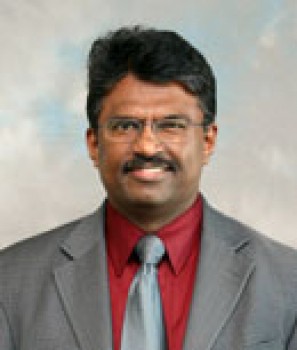
Optical Society Recognizes Profs Research Successes Two UT Dallas faculty members have been elected fellows of the Optical Society of America for their pioneering work in decidedly high-tech areas of the field of optics. Dr. Duncan MacFarlane was recognized for his “contributions to advancing integrated optics and their applications, including photonic filters, advanced displays and micro-optics.” Dr. Lakshman Tamil was recognized “for significant contributions to the design and development of multi-terabit switches using photonic-electronic hybrid sub-wavelength switching.” Both are professors of electrical engineering in the University’s Erik Jonsson School of Engineering and Computer Science.
Professor Named Fellow of National Academy of Inventors
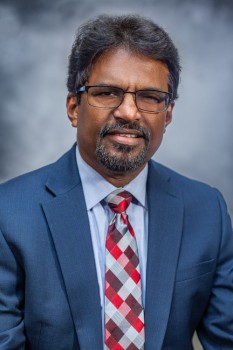
Professor Named Fellow of National Academy of Inventors Dr. Lakshman Tamil, professor of electrical and computer engineering at The University of Texas at Dallas, has been named a fellow of the National Academy of Inventors (NAI).

Tamil is one of 168 new fellows who will be inducted on April 10 at the academy’s annual meeting in Phoenix.

The distinction of fellow is given by the NAI to academic inventors who have demonstrated a prolific spirit of innovation in creating or facilitating inventions that have made a tangible impact on quality of life, economic development and the welfare of society.

Funding

AIM-HDR: AI/ML-Powered Secure Healthcare Data Repository
230,440 - National Institutes of Health (AIM-AHEAD) [2023/09–2024/09]
The goal of the project is to study the feasibility of developing a data repository for storing encrypted raw as well as curated healthcare data to advance research in understanding and eliminating healthcare disparities [1]-[5] and for training the next generation of researchers especially from under-represented groups. A prototype cloud-based data repository will be developed to store Protected Health Information (PHI) and Metadata to conduct the feasibility study. The cloud-based data repository will ensure that it is easily accessible to all AIM-AHEAD researchers in a flexible manner. The repository will receive all types of structured, semi-structured, unstructured data including EHR/EMR data, image data, synthetic data, sociological data, economic data, and demographic data. Received data will go through the ETL/ELT processes before being stored in the data repository. The stored data will be utilized by AIM-AHEAD researchers for analyzing, identifying, and eliminating healthcare disparities. The data repository will seamlessly work with the other three AIM-AHEAD resource centers (respectively, for Data Curation and Harmonization, for Data Governance, and for Open-source AI/ML Tools) as well as with the AIM-AHEAD Infrastructure Core. The stored data will be categorized in different data marts for users to efficiently search and browse the repository and its datasets, as well as receive advice on which datasets are the most relevant for their research queries.