Doctor of Philosophy - Pharmacology and Physiology
University of New South Wales (UNSW)/Garvan Institute of Medical Research (GIMR) - 2017
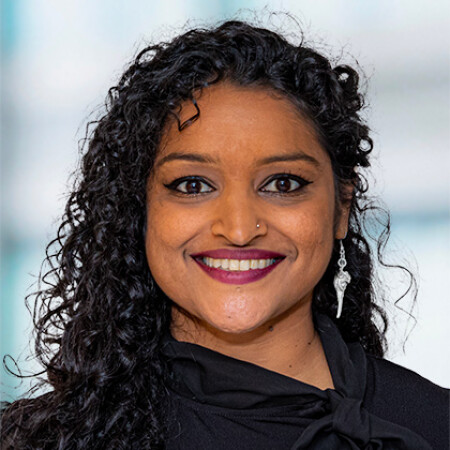
Kirupa Suthakar
Assistant Professor - Department of Speech, Language, and Hearing
Research interests: Neuroanatomy and neurophysiology of the descending auditory system, focusing on auditory efferent circuits, hearing loss, and non-canonical neuromodulation
972-883-3025
EA5.410G
Descending Auditory Circuits Laboratory
Curriculum Vitae
ORCID
Currently accepting graduate students
Professional Preparation
Bachelor of Medical Science (First Class Honours)
University of New South Wales (UNSW)/Garvan Institute of Medical Research (GIMR) - 2012
University of New South Wales (UNSW)/Garvan Institute of Medical Research (GIMR) - 2012
Bachelor of Medical Science
University of Technology, Sydney - 2011
University of Technology, Sydney - 2011
Bachelor of Science - Psychology
Macquarie University, Sydney - 2007
Macquarie University, Sydney - 2007
Publications
Effects of early hearing deficits on olivocochlear efferent neuron morphology in mice 2026 - Journal Article
ABRpresto: An algorithm for automatic thresholding of the Auditory Brainstem Response using resampled cross-correlation across subaverages 2025 - Journal Article
Age-Related Changes to Olivocochlear Efferent Neurons in Mice with Pathological Hearing 2025 - Other
ABRpresto: An algorithm for automatic thresholding of the Auditory Brainstem Response using resampled cross-correlation across subaverages 2024 - Other
Serotonin excites medial olivocochlear neurons of the auditory efferent pathway 2023 - Journal Article
Experience-dependent flexibility in a molecularly diverse central-to-peripheral auditory feedback system 2023 - Journal Article
Noise Masking in Cochlear Synaptopathy: Auditory Brainstem Response vs. Auditory Nerve Response in Mouse 2022 - Journal Article
Strategies for Identification of Medial Olivocochlear Neurons for Patch-Clamp Studies of Synaptic Function Using Electrical Stimulation and Optogenetics 2022 - Book Chapter
Awards
NIDCD Retreat Best 10-minute Talk - National Institutes on Deafness and Communication Disorders (NIDCD) [2025]
NIDCD Director's Recognition Award for Summer Student Mentorship - National Institutes on Deafness and Communication Disorders (NIDCD)/National Institutes of Health (NIH) [2024]
Fellows Award for Research Excellence (FARE) - National Institutes of Health (NIH)/Office of Intramural Training and Education (OITE) [2024]
21st Australasian Auditory Neuroscience Workshop Best Talk by a Postdoctoral Fellow - Australasian Auditory Neuroscience Workshop (AANW) [2023]
NIDCD Retreat Best Traditional Talk - National Institutes on Deafness and Communication Disorders (NIDCD) [2023]
NIDCD Director's Recognition Award for EARssentials - National Institutes on Deafness and Communication Disorders (NIDCD) [2022]
ARO Travel Award - Association for Research in Otolaryngology (ARO) [2022]
ARO Presidential Citation - Association for Research in Otolaryngology (ARO) [2021]
SOMS Paper of the Month Award - University of New South Wales (UNSW), School of Medical Sciences (SOMS) [2016]
Sensory Neuroscience Symposium Prize - Excellence in Scientific Presentation - Western Sydney University (WSU) [2015]
Appointments
Assistant Professor
University of Texas at Dallas (UTD) [2025–Present]
University of Texas at Dallas (UTD) [2025–Present]
Visiting Fellow
National Institute on Deafness and Communication Disorders (NIDCD)/National Institutes of Health (NIH) [2020–2025]
National Institute on Deafness and Communication Disorders (NIDCD)/National Institutes of Health (NIH) [2020–2025]
Research Fellow & Physiology Core Coordinator
Harvard Medical School (HMS)/Massachusetts Eye and Ear (MEE) [2016–2020]
Harvard Medical School (HMS)/Massachusetts Eye and Ear (MEE) [2016–2020]
Honours & Doctoral Student
University of New South Wales, Australia (UNSW)/Garvan Institute of Medical Research (GIMR) [2012–2016]
University of New South Wales, Australia (UNSW)/Garvan Institute of Medical Research (GIMR) [2012–2016]
Research Assistant
University of Technology, Sydney (UTS) [2011–2012]
University of Technology, Sydney (UTS) [2011–2012]