Postdoctoral Research Fellow - Chemical Biology
The Scripps Research Institute - 2012
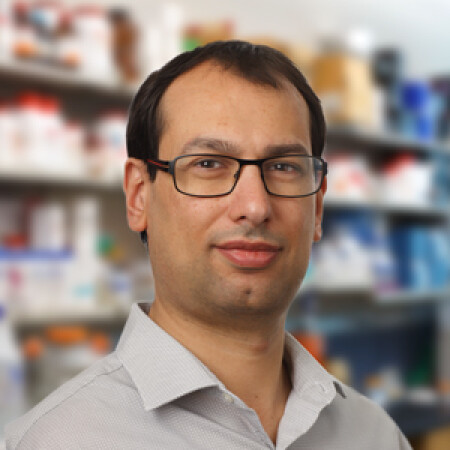
Alexander Adibekian
Professor of Chemistry and Biochemistry
Distinguished Chair in Natural Sciences and Mathematics
CPRIT Scholar in Cancer Research
Our laboratory operates at the interface of synthetic chemistry, biochemistry, and proteomics, developing chemical tools and mass spectrometry-based platforms for chemoproteomics-enabled target identification as well as drug and degrader discovery.
Professional Preparation
Ph.D. - Chemistry
ETH Zurich, Switzerland - 2009
ETH Zurich, Switzerland - 2009
M.Sc. - Life Science
Leibniz Universität Hannover, Germany - 2004
Leibniz Universität Hannover, Germany - 2004
Research Areas
1) Hypervalent iodine-based atom transfer reagents as chemoproteomic probes for target identification and drug discovery.
We are interested in developing new hypervalent iodine-based chemical probes and mass spectrometry methods for identifying cellular targets of bioactive small molecules.2) Natural product target identification.
We are actively applying our probes and proteomic methods to identify the cellular targets of structurally complex natural products with intriguing anticancer activities. Our goal is to understand their molecular mechanisms of action.3) Covalent-reversible tags for cellular delivery of peptides and proteins.
We are interested in small covalent-reversible tags that facilitate the transporter-mediated cellular delivery of hydrophilic, impermeable cargos such as peptides and proteins.4) Chemoproteomics-enabled drug discovery.
We are developing innovative chemical strategies to rapidly generate collections of structurally diverse covalent inhibitors, perform phenotypic screening in cancer cell lines, and identify their targets using our in-house chemoproteomic profiling methods.Selected recent publications:
1. Synthesis and Application of Bioactive N-Functionalized Aziridines. Angew. Chem. Int. Ed. 2025, 63, e202514630.2. Ketoboronate as a Minimal Covalent-Reversible Tag for Targeted Lysosomal Degradation of Extracellular and Membrane Proteins, J. Am. Chem. Soc. 2025, 147, 43124-43138.
3. Proteome-wide Covalent Targeting of Acidic Residues with Tunable N-Aryl Aziridines, J. Am. Chem. Soc. 2025, 147, 17517-17528.
4. Chemoproteomics-Enabled De Novo Proteolysis Targeting Chimera Discovery Platform Identifies a Metallothionein Degrader to Probe Its Role in Cancer, J. Am. Chem. Soc. 2025, 147, 7817-7828.
Publications
Hepatoprotective role for ERMP1 in MASLD-driven hepatocarcinogenesis and β-catenin-mutated tumors 2026 - Journal Article
A covalent irreversible inhibitor binds in two mutually exclusive conformations to the active-site cysteine residue of human aldehyde dehydrogenase 1A3 2026 - Other
Natural Product Target Identification of Wheldone, a Fungal Metabolite, as a KIF11 Inhibitor in Ovarian Cancer Using the DiffPOP (Differential Protein Precipitation) Method. 2026 - Journal Article
Natural Product Target Identification of Wheldone, a Fungal Metabolite, as a KIF11 Inhibitor in Ovarian Cancer Using the DiffPOP (Differential Protein Precipitation) Method 2026 - Journal Article
Total Synthesis of (-)-Neocucurbol C Enabled by Pattern Recognition and MHAT Cyclization 2025 - Journal Article
Appointments
Professor, Distinguished Chair in Natural Sciences and Mathematics
University of Texas at Dallas [2026–Present]
University of Texas at Dallas [2026–Present]
Professor, LAS Endowed Chair
University of Illinois Chicago [2022–2026]
University of Illinois Chicago [2022–2026]
Associate Professor
Scripps Research, Florida Campus [2017–2022]
Scripps Research, Florida Campus [2017–2022]
Assistant Professor
University of Geneva, Switzerland [2013–2017]
University of Geneva, Switzerland [2013–2017]
News Articles
CPRIT Awards $10M to Three North Texas Doctors For Cancer Research
The Cancer Prevention and Research Institute of Texas approved more than $15 million in CPRIT scholar recruitment grants to bring five new cancer scientists to four Texas research institutions. Of those five individuals, three are based in North Texas.“The grants approved today mark a significant step forward in cancer research and recruitment,” CPRIT CEO Kristen Doyle said. “The CPRIT Scholar program enables Texas institutions to bring the best and brightest cancer investigators here to Texas. This is important to Texans because the innovative research that happens here can lead to novel cancer-fighting clinical trials, drugs, and treatments that might be available first to Texans.”
Dr. Alexander Adibekian at The University of Texas at Dallas received $3.5 million in grant funding.
Chemists synthesize natural anti-cancer compound with efficient new process
Scripps Research chemists Hans Renata, PhD, and Alexander Adibekian, PhD, have discovered a way to efficiently create a synthetic version of a valuable natural compound called cepafungin I, which has shown promise as an anti-cancer agent. Through this, they were able to understand how the bacterial secretion is able to block a piece of molecular machinery known as a proteasome—a strategy that many existing cancer medications use to destroy tumor cells. They found that cepafungin I bound to not one but two places on the proteasome, enacting a powerful result. Their report appears in the journal Cell Chemical Biology.After creating the compound, the chemists discovered that in addition to being exceptionally selective at targeting two sites on the proteasome, it didn’t show any undesired cross-reaction with other proteins in cells, a feature that could make it a better drug candidate. Three proteasome inhibitors—bortezomib, carfilzomib and ixazomib—have already been approved by the U.S. Food and Drug Administration for the treatment of multiple myeloma. “But those medications have some potentially serious side effects, and cancer cells may develop resistance to them over time,” says co-author Adibekian, associate professor of chemistry at Scripps Research. “There is a need for alternative, more specific proteasome inhibitors.” Going forward, the scientists plan to continue structure-guided design of similar molecules with alternative structural features in search of useful compounds with superior anti-cancer activity.